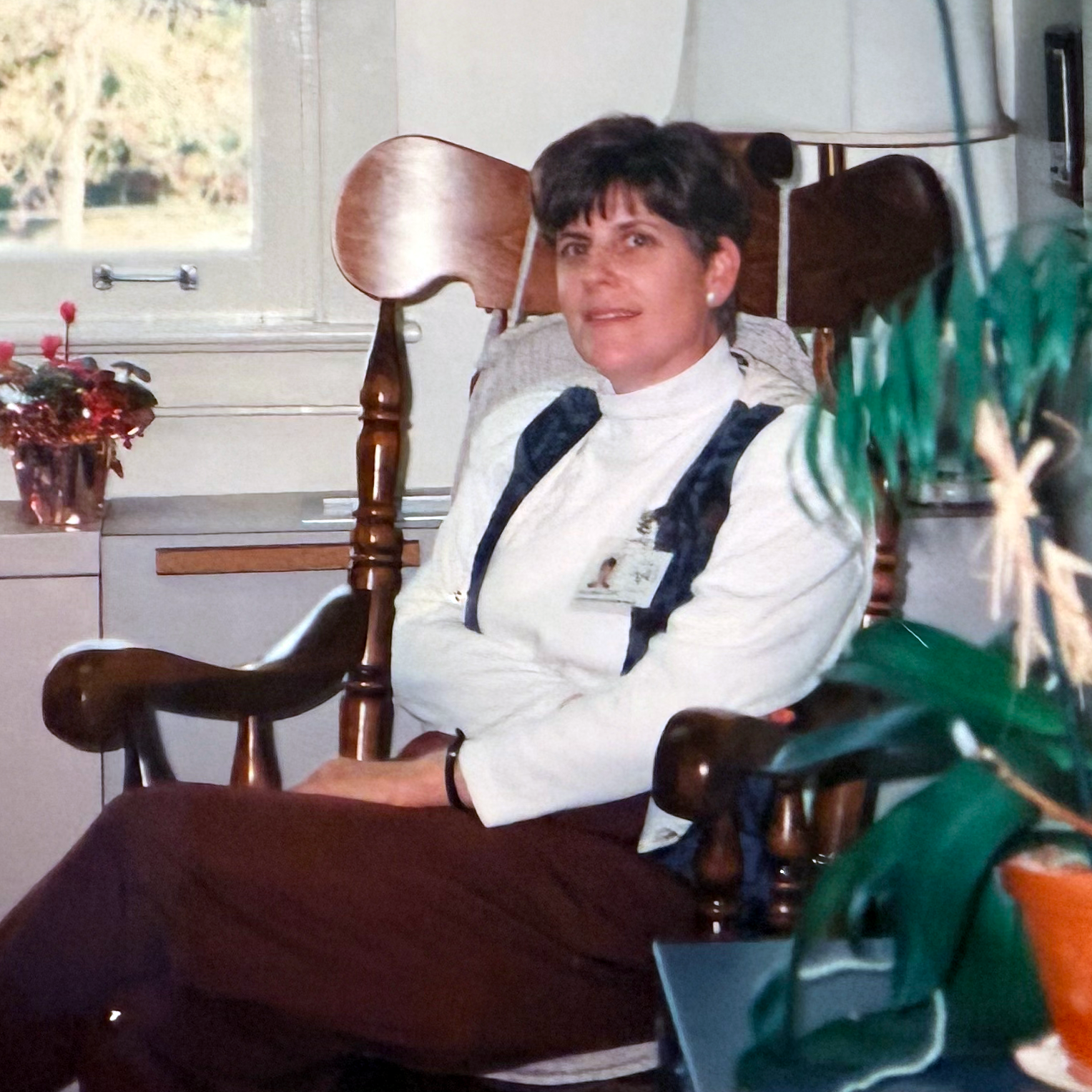
Sue Jessell joined Blue Ridge Hospice around 1990 and later became a nurse practitioner specializing in palliative care.
When Sue Jessell came to Blue Ridge Hospice in 1990, she was already a nurse. Yet after her father-in-law died and she watched her mother-in-law grieve, Sue realized how unprepared she felt to help. "I was a nurse, but we really fell short when it came to taking care of dying patients," she remembers.
Sue enrolled in Blue Ridge Hospice's volunteer training program, seeking the knowledge she had not received in traditional healthcare settings.
Shortly after she began volunteering, she was asked to cover on-call nursing shifts, eventually joining a small team that included Nikki Hill and Mary Jane Lee.
Sue helped guide the organization through a period of significant growth and change, serving patients and families for 13 years before relocating to Pittsburgh in 2003.
Pioneers On The Front Lines
Sue, Nikki, and Mary Jane worked together to provide whatever was needed.
Long before hospice care services would be provided through the support of an interdisciplinary team, they handled clinical care, bathing, and support for families themselves. “We made a lot of visits because I remember when the census got to be 12, we were getting a little nervous about how are we going to take care of all these people,” Sue remembers.
They also quickly learned that end-of-life care required time, presence, and attention not only to a patient’s physical needs, but also to their emotional, spiritual, and practical concerns. “We had to be so creative, not only in how we cared for patients medically, but even psychologically and spiritually,” Sue says.
Because they were involved in every aspect of care, the nurses gained firsthand experience with the complex and deeply personal needs that arise at the end of life. “It was great,” Sue says, “we had a lot of autonomy.”
“I’m actually really happy that I had my Hospice experience when we had essentially no resources. It allowed us to be innovative.”
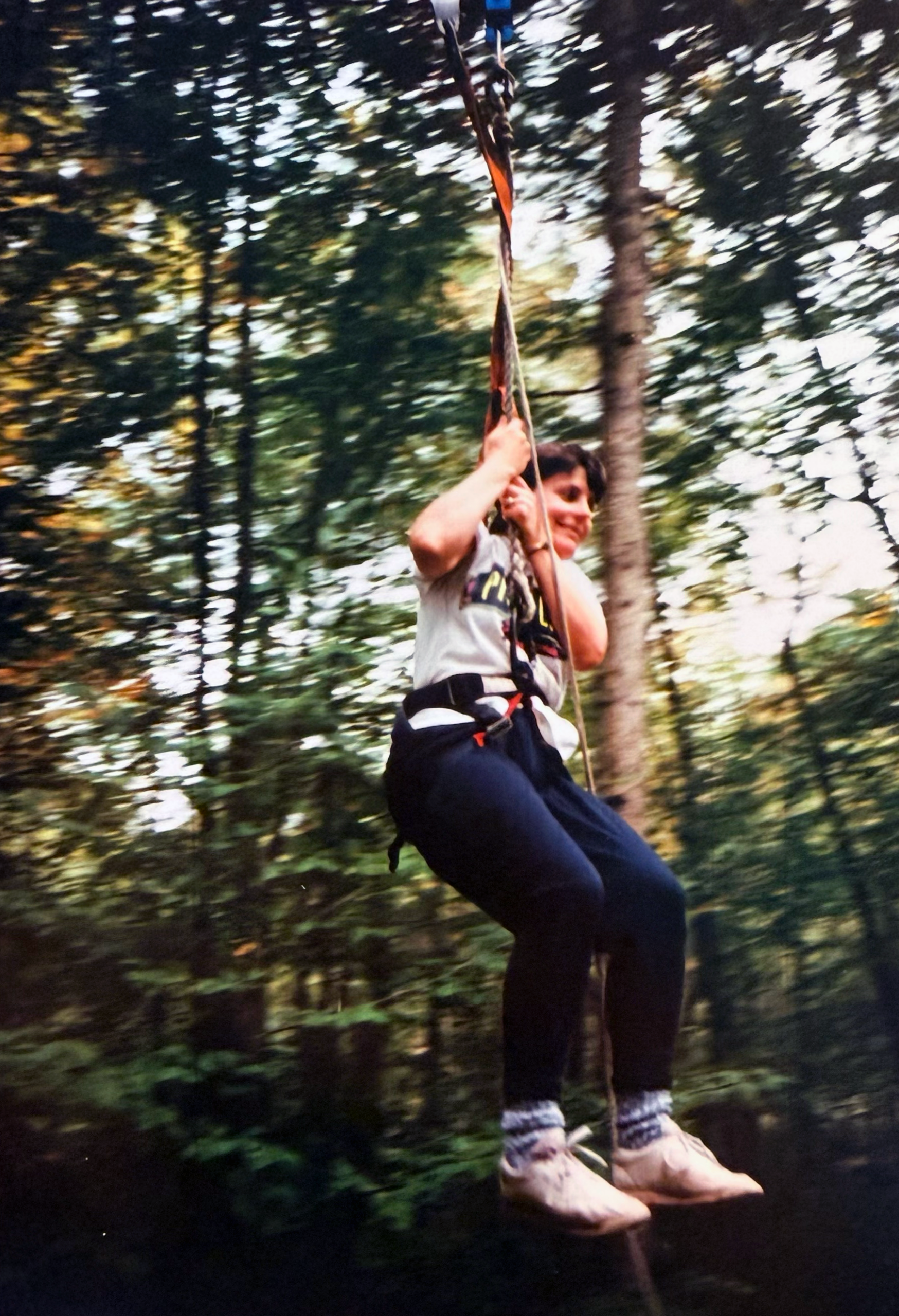
Sue Jessell was never one to shy away from an adventure. During a team retreat, she took to the zipline with the same courage and enthusiasm she brought to hospice nursing every day.
The Art and Science of Hospice Nursing
The time they spent with patients and families allowed them to listen, observe, and adapt, helping shape an approach to care that was as compassionate as it was practical.
Sue learned that clinical knowledge was only part of caring for patients. The other part was listening closely enough to understand what each person truly needed. “It’s not just knowing the medicine. It’s listening to people’s stories, understanding their fears, learning from them, and carrying those lessons forward to help the next patient.”
She remembers a young man whose greatest fear was being buried alive. Rather than dismissing his concern or assuming they understood it, the team invited someone from a funeral home to speak with him and answer his questions. “It really drove home for me how important it is to, you know, you think you know what people are afraid of, but you’ve really got to listen and ask and pay attention to what people are saying.”
For Sue, that experience reinforced what she calls the blending of “the art and the science of nursing.” Knowledge made good care possible, but listening shaped how that care was given.
We’re All Walking Each Other Home
Over time, Sue realized that some of her most important lessons came not from textbooks or training, but from the patients and families she served.
Sue came to believe that hospice care is, at its core, about guiding people through one of life’s most universal experiences. “We’re all walking each other home,” she says. It is a simple idea, but one that reflects the lessons she learned as a young hospice nurse: listen carefully, be present, and never underestimate the power of human connection.
For Sue, caring for people at the end of life was never simply a profession. It was a privilege, a calling, and in many ways, a gift.
“It’s such a gift being with people at the most vulnerable part of their life,” Sue says. “You never forget what a privilege it is that a family lets you into their home during that time.”
Those experiences shaped not only the way she practiced nursing, but also the way she viewed life. Caring for people at the end of life gave her a deeper appreciation for what it means to be present, to listen without judgment, and to focus on what truly matters.
After moving to Pittsburgh in 2003, Sue returned to school, became a nurse practitioner, and spent the remainder of her career in palliative care and oncology before retiring. She describes her experience serving with Blue Ridge Hospice as formative, and to this day, she still considers herself a hospice nurse at heart.