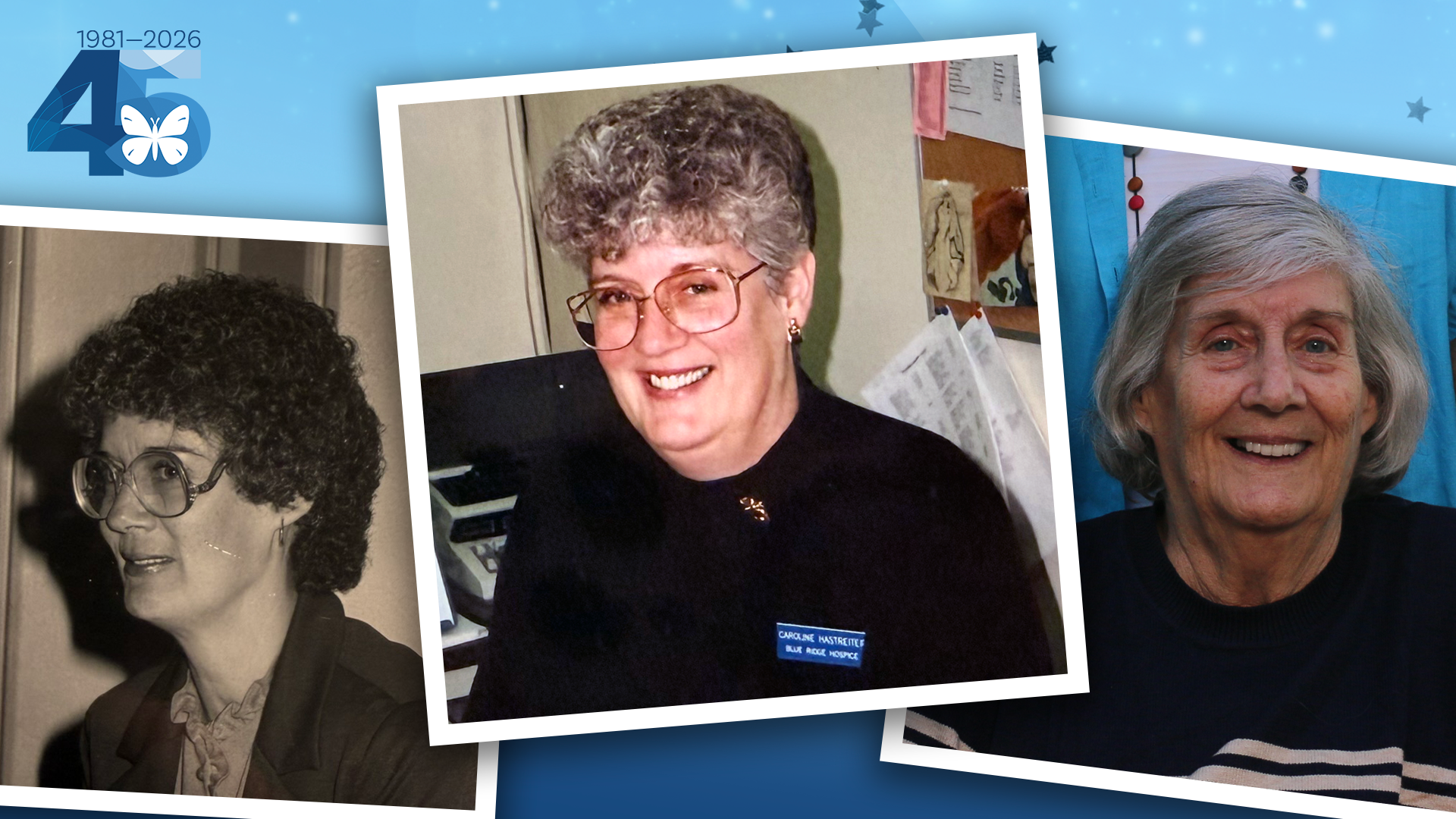
“We had to convince them there was another way.”
When a good friend invited Caroline Hastreiter to attend Blue Ridge Hospice’s very first volunteer training program, she agreed to go along. The 12-session program began in October 1980, and 34 volunteers graduated from the first class in January 1981; she agreed to go along. Before the training ended, Caroline learned the organization was searching for an executive director. Although Blue Ridge Hospice initially hoped to hire a nurse, Caroline believed she could help. With a background in respiratory therapy, she understood the medical language and convinced the hiring team that she could do the job. She applied and got the job.
In the early 1980s, hospice was still new, and families did not understand what hospice offered. Physicians were reluctant to stop treatment and refer patients for comfort-focused care. Funding was uncertain, and the young organization depended on volunteers, grants and community support.
For Caroline, every day meant helping the community see that there was another way to care for people nearing the end of life.
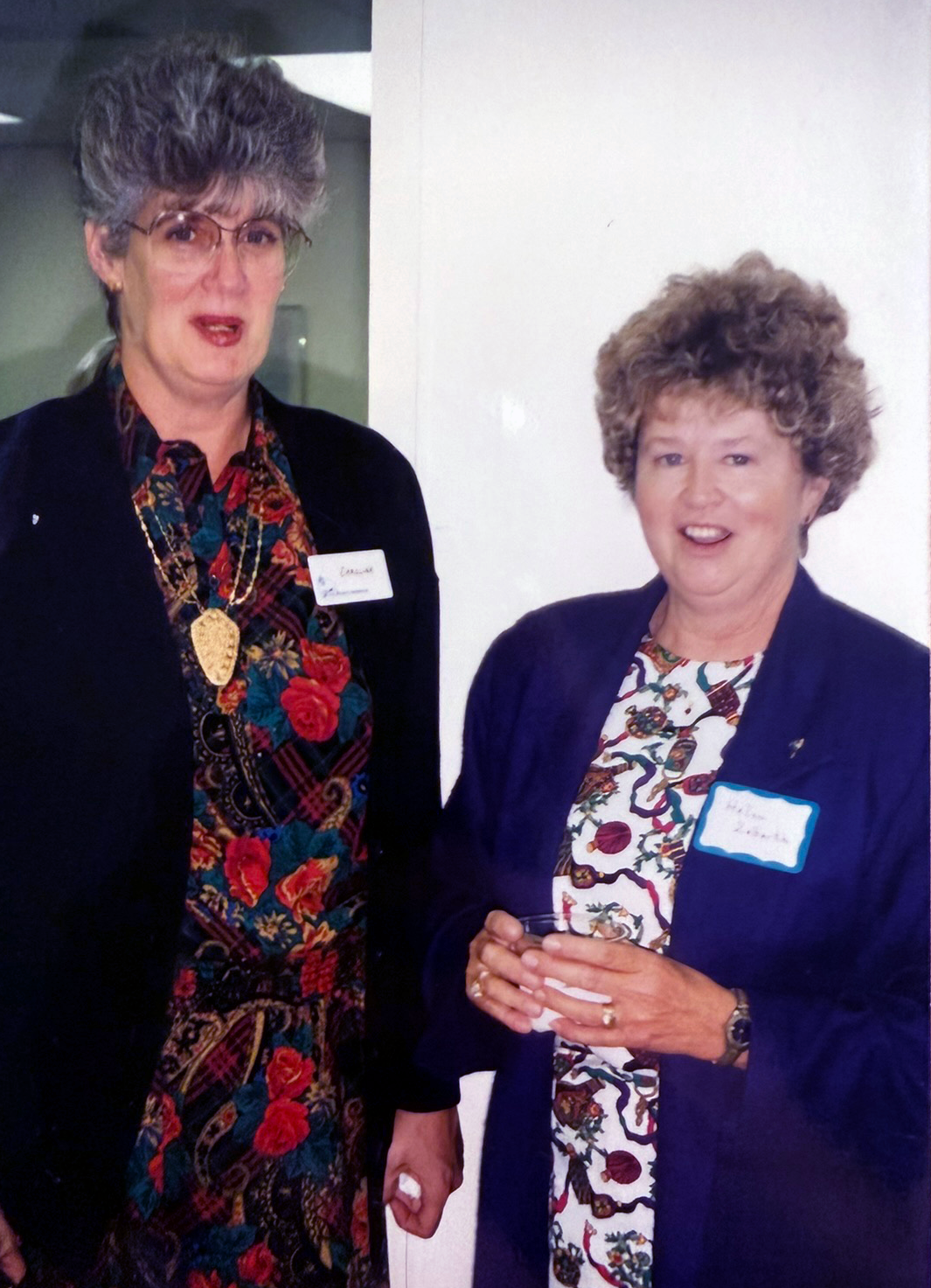
Caroline Hastreiter and Helen Zebarth, whose leadership helped shape Blue Ridge Hospice in its earliest years.
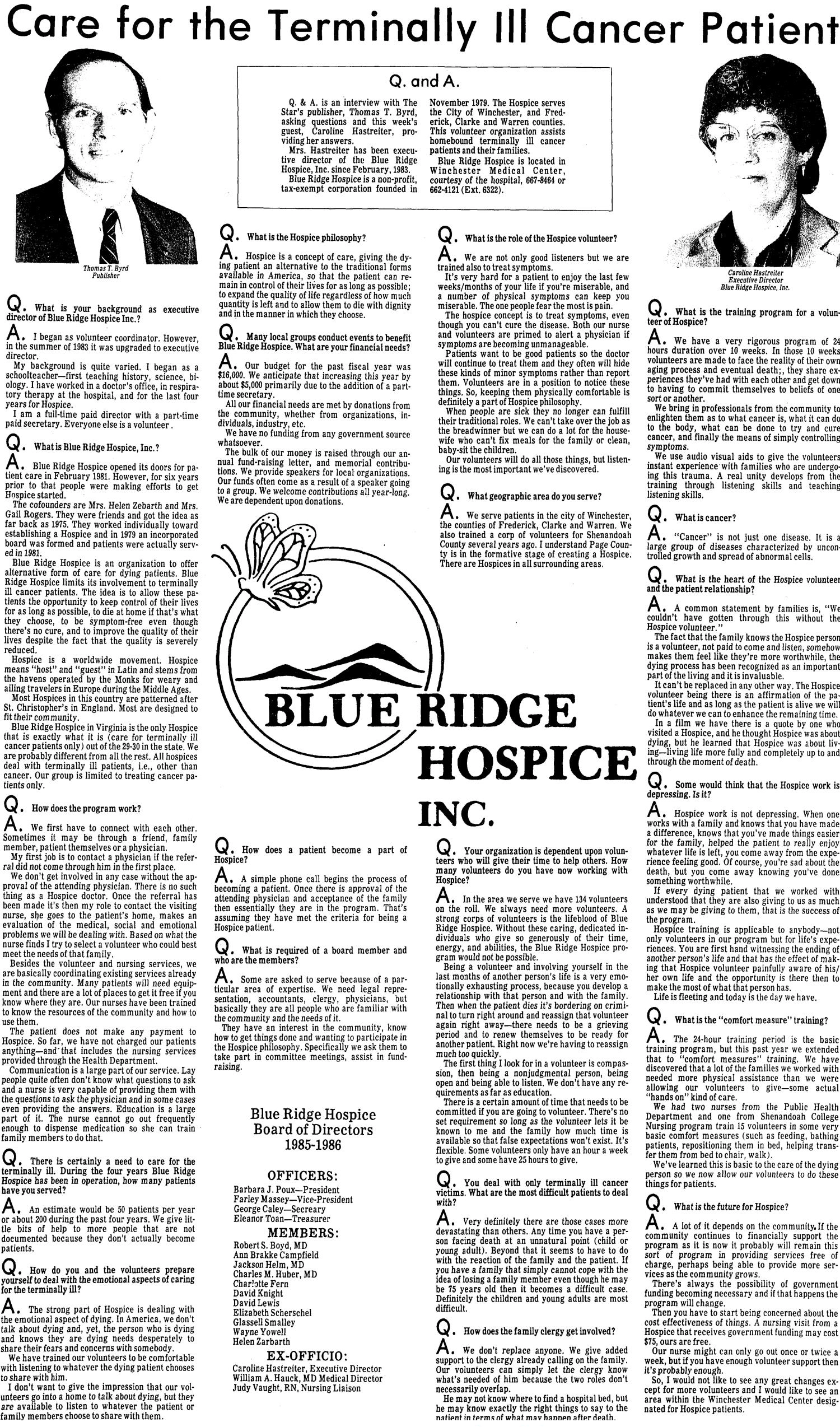
In a community Q&A published in The Winchester Star on March 30, 1985, Caroline Hastreiter helped readers better understand hospice care and the support available to patients and families.
Building Understanding, Earning Trust
Caroline began producing newsletters for local physicians and building relationships throughout the medical community. She answered questions, explained what hospice could offer and continued making the case for care that addressed more than a person's medical needs.
At that time, physicians often focused on treatments intended to cure disease. Referrals sometimes came only one, two or three days before a patient died, leaving very little time for hospice to provide comfort care.
Changing those perceptions took time. As patients and families experienced hospice care and shared those experiences with others, word began to spread. Physicians also began to see the difference hospice could make. Little by little, trust grew and perceptions began to shift.
“We just had to keep plugging away at what we could do.”
Introducing Hospice to the Medical Community
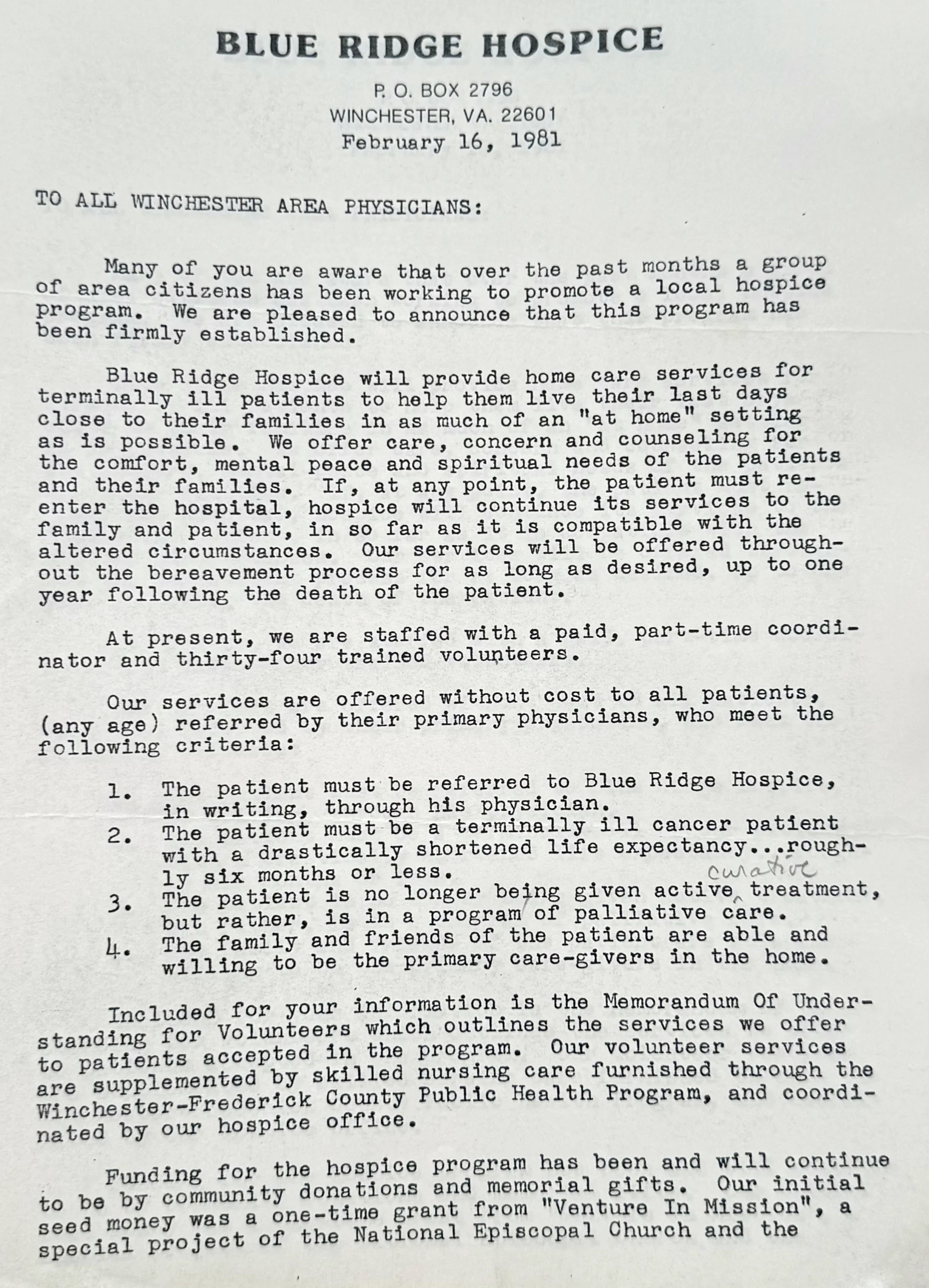
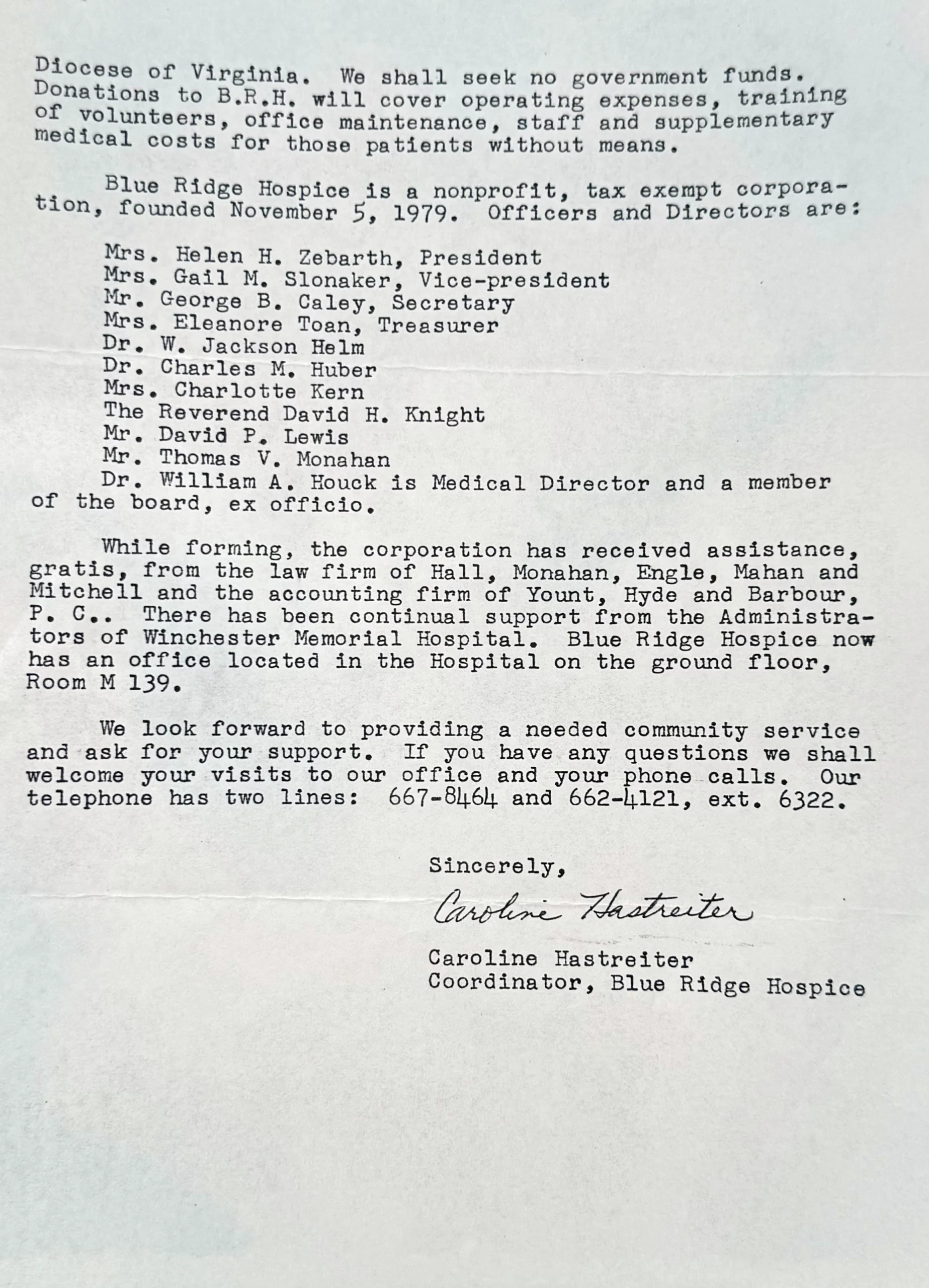
One of Caroline’s early priorities was helping local physicians understand what hospice could offer. In a February 1981 letter to Winchester-area physicians, she introduced the newly established program, explained its services and referral criteria, and described a broader approach to care that included comfort, counseling, spiritual support and bereavement services. The letter offers an early glimpse of the education and relationship-building that would become such an important part of Caroline’s work.Your Content Goes Here
Growing a Community of Volunteers
Caroline’s persistence, resourcefulness and commitment helped Blue Ridge Hospice move from an idea to a growing community organization.
Many of Blue Ridge Hospice’s early pioneers were women. She credits women including Helen Zebarth and Gail Rogers with helping turn the idea of hospice into a reality and securing the early support needed to begin offering services.
The training of increasingly more volunteers has always continued on a regular basis after that first training in 1981. Volunteer training became an important part of Caroline’s work to educate the community about hospice care.
Community members stepped forward to learn how to accompany patients and families through some of life’s most vulnerable moments. Each new volunteer helped Blue Ridge Hospice extend its presence, deepen community understanding and reach more families.
By Blue Ridge Hospice’s 10th anniversary in 1991, approximately 200 volunteers had been trained.
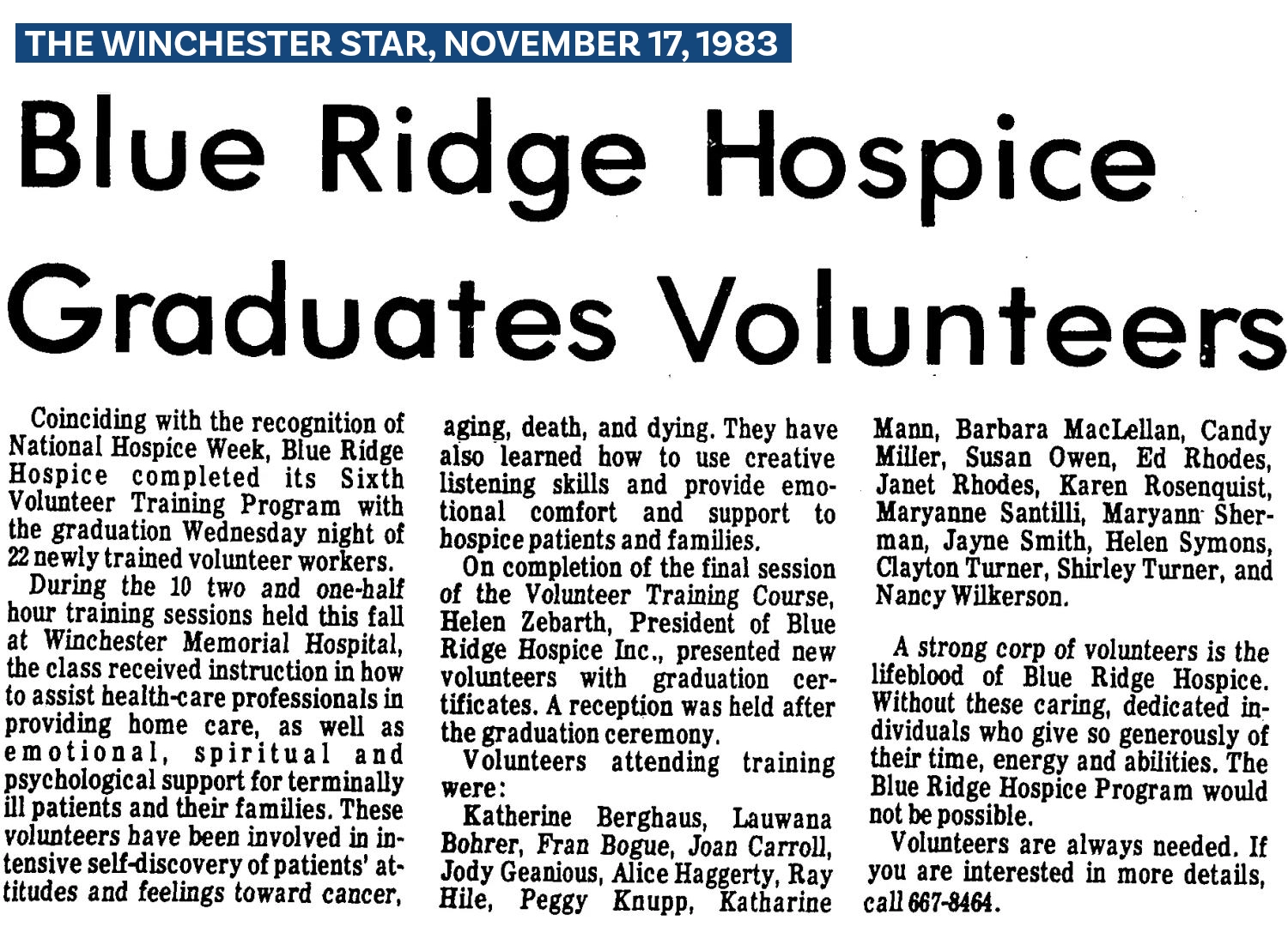
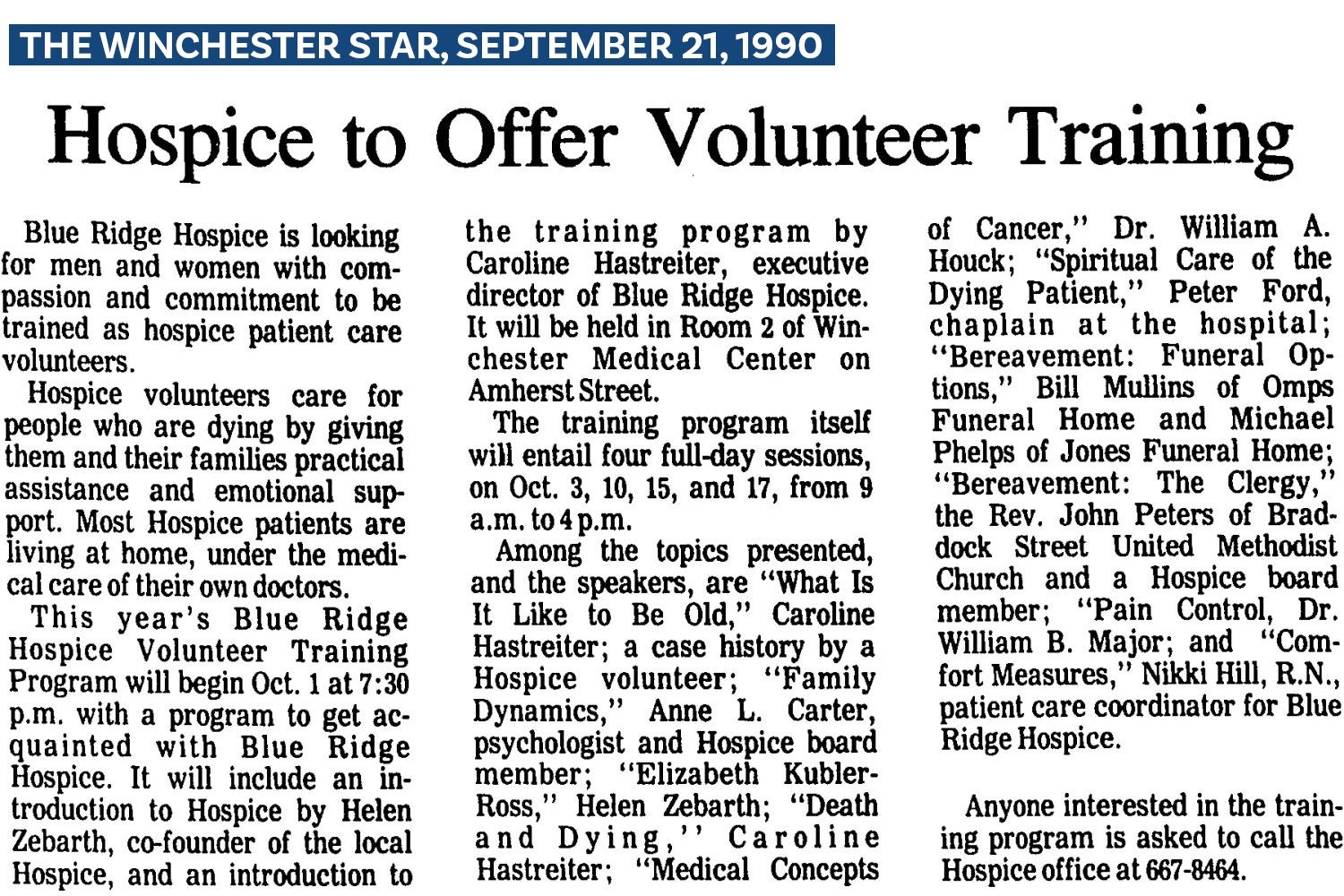
Volunteer training helped Blue Ridge Hospice build a community of people prepared to support patients and families during serious illness and at the end of life.
Champions of a New Kind of Care
Caroline remembers Dr. Jack Helm as a quiet but important supporter of hospice. A founding board member and one of Blue Ridge Hospice’s earliest physician champions, he helped the organization establish hospice care as a trusted model within the local medical community. At a time when Caroline remembers physicians being reluctant to embrace hospice, Helm was among the local doctors who believed in its value for patients and families. He became someone the young organization could turn to as it worked to build understanding and acceptance among other physicians.
Though he rarely sought attention, he believed in the mission and became a trusted ally as Blue Ridge Hospice worked to build credibility in the medical community. His office was not far from Blue Ridge Hospice’s early location, and Caroline remembers that they could easily stop by one another’s offices to talk.
“We shared many, many conversations,” she says.
Helm’s commitment continued well beyond those early conversations. He served on Blue Ridge Hospice’s board from its beginnings until his retirement from the board in 2013. That year, the organization honored him with its Shining Light recognition for his contributions to Blue Ridge Hospice’s work and success.
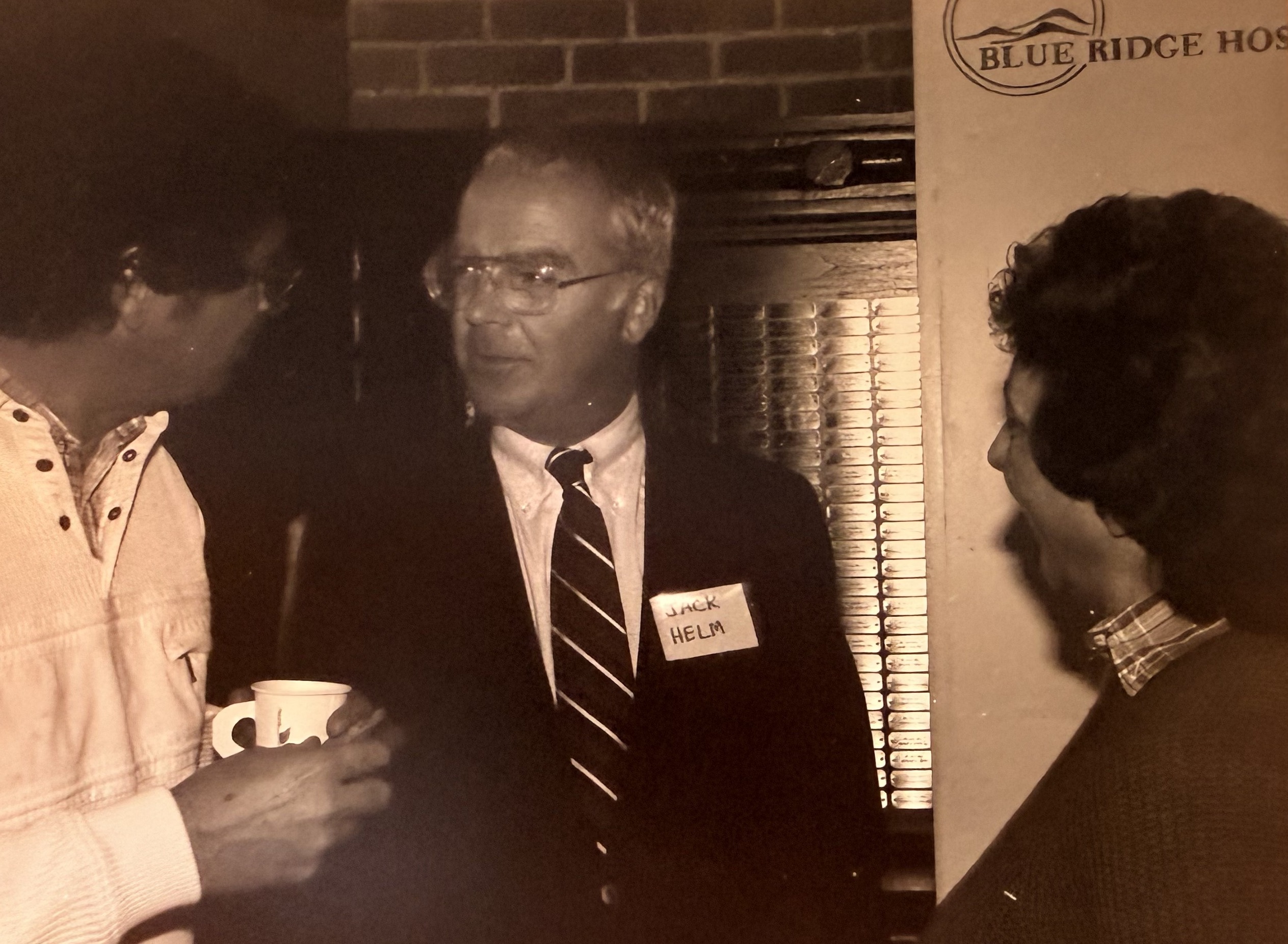
Dr. Jack Helm was one of Blue Ridge Hospice’s earliest physician champions, helping build trust in hospice care within the local medical community.
A Legacy of Compassionate Care
Caroline understood that when medicine alone could no longer provide answers, patients and families still needed comfort and support. They needed companionship. They needed guidance. They needed someone willing to listen and walk alongside them through uncertainty.
Caroline helped physicians recognize when treatment was no longer the only answer. She helped community members understand how hospice could support their neighbors. She helped volunteers find meaningful ways to serve. She helped connect generosity throughout the community with patients and families who needed care.
Her story is a reminder that Blue Ridge Hospice grew because leaders like Caroline listened, recognized unmet needs, and activated the community.
She helped a community discover another way to care for people at the end of life. In doing so, she helped establish a belief that continues to guide Blue Ridge Care today: listen to people, understand what they need, and respond with compassionate support.
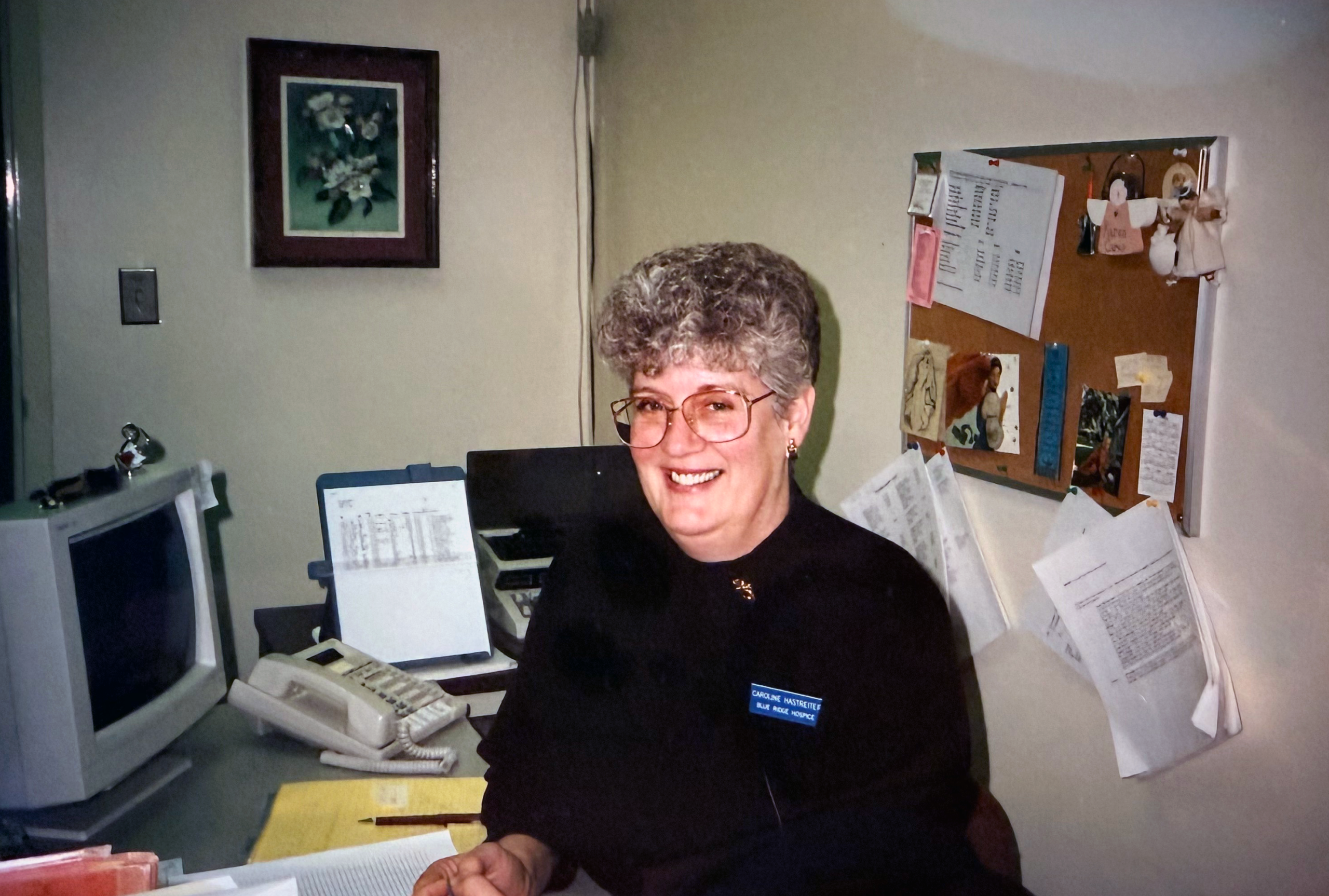
Caroline Hastreiter’s 17 years of leadership helped transform Blue Ridge Hospice from a new idea into a trusted source of care for the community.
Caroline served Blue Ridge Hospice for 17 years, from 1981 to 1998.
During those years, she helped guide the organization through some of its earliest milestones, from caring for its first patients and building its volunteer program to expanding services and strengthening community support. She helped coordinate the people, relationships and resources that transformed an unfamiliar idea into a trusted source of care. Her remarkable contribution can be seen not only in the organization she helped build, but in the generations of volunteers, caregivers and community members who continued the work she helped set in motion.